Professional Underground Utility Installation
Every home and business needs water, sewer, electrical, and other utilities. Getting those lines from the street to your building requires properly dug trenches with the right depth, slope, and backfill. Herbert Excavating provides utility trenching services for residential and commercial projects in Pennsylvania and Florida.
We dig trenches for water lines, sewer connections, electrical conduit, gas lines, and telecommunications infrastructure. Whether you’re hooking up a new home, adding a service line, or installing underground utilities for a commercial development, we ensure the trenches are dug to code and backfilled correctly.
What We Trench For
Water Service Lines
Trenching from the main line to your building for potable water supply.
Sewer & Septic Connections
Digging trenches for sewer laterals or septic system drain fields.
Electrical & Telecommunications
Installing conduit trenches for power lines, phone cables, fiber optic, and data connections.
Gas Lines
Trenching for natural gas or propane service lines from the meter to the structure.
Irrigation Systems
Digging trenches for sprinkler lines and agricultural irrigation infrastructure.
Drainage & Stormwater Piping
Installing subsurface drainage pipes to move water away from buildings or problem areas.
How Utility Trenching Works
1. Utility Location & Marking
Before we dig, existing utilities must be marked. We coordinate with utility locating services (PA One Call or Sunshine 811 in Florida) to ensure we know where existing lines are buried.
2. Trench Layout
We mark the path for the trench based on your plans, service connection points, and required routing.
3. Excavation
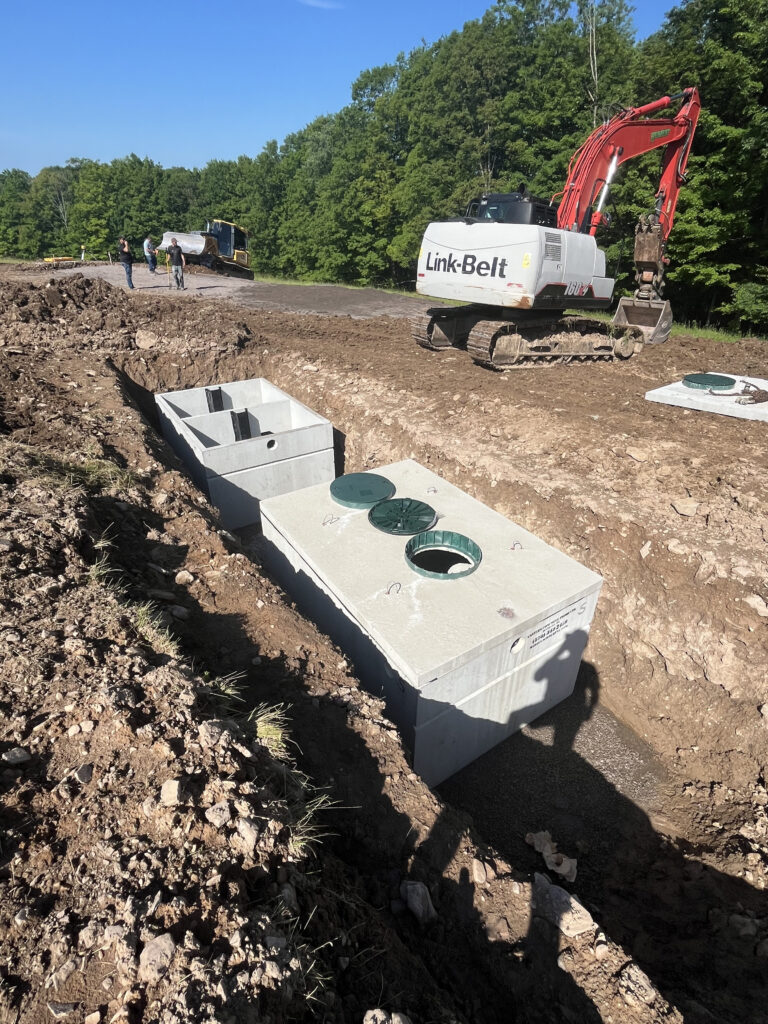
We use trenchers or excavators to dig the trench to the required depth and width. Depth varies depending on the utility type and local code requirements.
4. Bedding & Pipe Installation
If needed, we install bedding material (sand or gravel) to support the pipe or conduit. The utility contractor typically installs the pipe itself.
5. Backfill & Compaction
Once the utility is in place and inspected, we backfill the trench and compact the soil to prevent settling.
Why Proper Trenching Matters
Cutting corners on utility trenching leads to problems. Trenches that are too shallow can result in damaged lines. Trenches without proper slope cause drainage issues. Poorly compacted backfill creates settling, sinkholes, and surface damage.
We’ve dug enough trenches to know what works. We follow local codes, maintain proper depth, ensure correct slope for sewer and drainage lines, and compact backfill so it doesn’t sink later. The goal is to install utilities correctly the first time so you don’t have to dig them up again.
Working With Other Contractors
We often work alongside plumbers, electricians, and utility companies who are installing the actual pipes and conduit. We dig the trench, they install the line, and we backfill once everything is inspected and approved. This coordination is routine for us, and we’re used to working on timelines that involve multiple trades.
If you’re managing a project and need trenching done, we’ll coordinate with your other contractors to make sure the work flows smoothly.
Service Areas
We provide utility trenching services in northeastern Pennsylvania, including Kingsley, Scranton, Wilkes-Barre, and surrounding communities. We’re also offering trenching services in central Florida as part of our expansion into the Orlando, Clermont, Spring Hill, and Jacksonville regions.
Frequently Asked Questions
How deep do utility trenches need to be?
It depends on the type of utility and local code requirements. Water lines are typically buried 3-4 feet deep to prevent freezing. Electrical conduit depth varies by voltage and whether it’s direct burial or in conduit. Sewer lines need enough depth to maintain proper slope. We follow local codes for every trench we dig.
Can you trench through rock or hard soil?
Yes, but it takes more time and sometimes different equipment. If we encounter rock, we’ll assess whether we can dig through it or if blasting is required. We’ll let you know what’s involved before proceeding.
Do you install the pipes and conduit, or just dig the trench?
We dig the trench. In most cases, a licensed plumber, electrician, or utility contractor installs the actual pipe or conduit. Once they’re done and the work is inspected, we backfill and compact the trench.
What if there are existing utilities in the way?
That’s why we have utilities marked before we dig. If an existing line is in the path, we work around it carefully or coordinate a reroute. If we accidentally damage a line, we stop work immediately and contact the utility owner.
How long does trenching take?
It depends on the length of the trench, soil conditions, and how many obstacles we encounter. A residential water service trench might take a few hours, while a longer commercial utility run could take a day or more.
Will my yard be torn up after trenching?
There will be some disturbance, yes. We backfill and grade the trench, but it takes time for grass to grow back. We do our best to minimize disruption and clean up the work area when we’re done.
Can you trench in winter?
In Pennsylvania, frozen ground can make trenching difficult or impossible. In Florida, weather is less of an issue. If you need trenching done during cold months in PA, we’ll assess ground conditions and let you know if it’s feasible.
Need a Trench Dug?
If you’re installing utilities and need professional trenching, let’s talk. We’ll assess the site, confirm depth and routing requirements, and provide a clear estimate for the work.
📞(570) 702-7679
📧 [email protected]
Free estimates. Licensed and insured.