
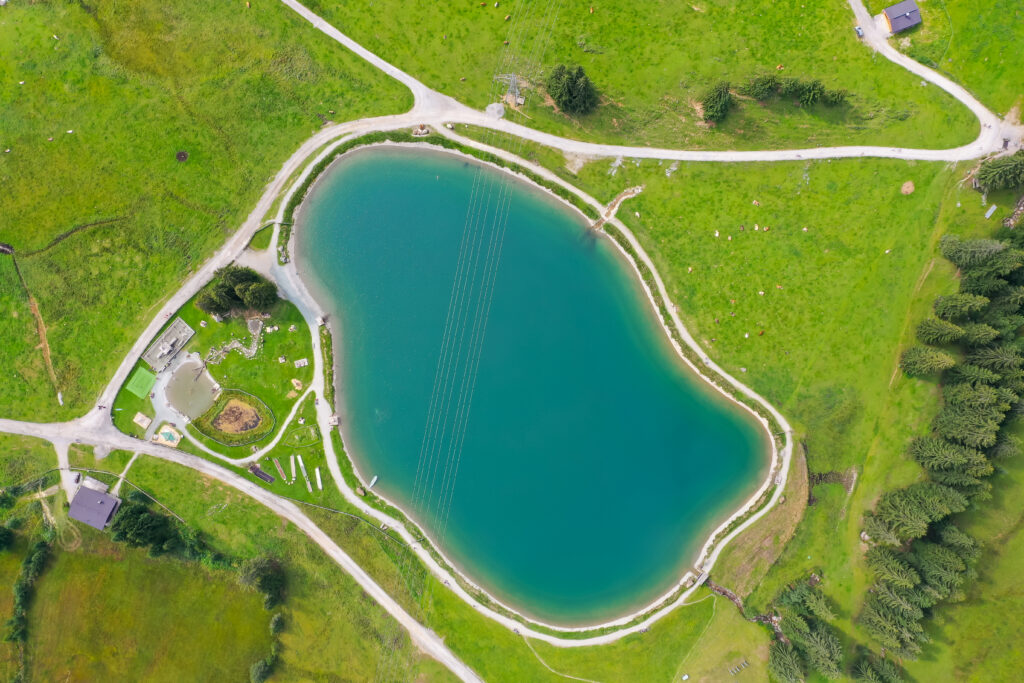
Build or Restore Functional Water Features
A well-built pond adds value to your property and serves multiple purposes—irrigation, livestock watering, fishing, fire protection, and aesthetics. Herbert Excavating provides pond construction and repair services for residential and agricultural properties in Pennsylvania.
Whether you want to build a new pond from scratch, restore an existing one that’s silted in, or repair a failing dam, we have the excavation equipment and experience to get it done.
What We Do
New Pond Construction
We excavate, shape, and build ponds to your specifications. This includes digging the pond basin, creating the proper depth and slope, and constructing dams or berms to hold water.
Pond Restoration
Over time, ponds fill with sediment, vegetation, and debris. We remove accumulated material, reshape the basin, and restore the pond to its original capacity.
Dam Repair & Reinforcement
If your pond’s dam is eroding, leaking, or structurally compromised, we excavate and rebuild the dam to restore its integrity.
Spillway Installation
We construct spillways that allow excess water to safely discharge during heavy rain, preventing dam failure and erosion.
Shoreline Stabilization
We install riprap, reshape slopes, and address erosion problems along pond edges.
Pond Expansion
If you need a larger pond, we can expand the existing basin and reinforce the dam to accommodate increased water volume.
Types of Ponds We Build
Farm Ponds
Livestock watering, irrigation, and agricultural use.
Fishing Ponds
Recreational fishing and aquatic habitat.
Fire Protection Ponds
Water storage for firefighting and emergency use.
Aesthetic & Landscape Ponds
Decorative water features that enhance property appearance and value.
Retention Ponds
Stormwater management and runoff control for developments and commercial sites.
Our Pond Construction Process
1. Site Evaluation
We assess the property to determine the best location for the pond based on topography, soil conditions, drainage patterns, and your intended use.
2. Design & Sizing
We work with you to determine pond size, depth, dam height, and other specifications. If engineering is required, we coordinate with your engineer.
3. Excavation
We dig the pond basin, shape the slopes, and create the proper depth profile. Most ponds have deeper areas for fish habitat and shallower edges for vegetation.
4. Dam Construction
We build or reinforce the dam using compacted soil, ensuring it’s stable and capable of holding water.
5. Spillway & Outlet Installation
We install spillways or overflow pipes to safely discharge excess water.
6. Finishing & Seeding
We shape and grade the surrounding area, seed disturbed soil, and leave the site ready for water to fill.
Pond Repair & Maintenance
Ponds don’t last forever without maintenance. Sediment accumulates, vegetation takes over, dams erode, and leaks develop. If your pond isn’t holding water, is too shallow, or the dam is failing, we can assess the problem and recommend repairs.
Common repairs include:
- Dredging to remove sediment and restore depth
- Dam reconstruction to stop leaks and prevent failure
- Spillway repair to prevent erosion
- Shoreline stabilization to address erosion and slumping
Other Work That Often Comes With a Pond Project
A pond project rarely stands alone. Whether you’re building new or restoring an existing one, other site work typically needs to happen around it — and handling it together is almost always more efficient than scheduling it separately.
If the pond site is wooded or overgrown, the vegetation needs to come out before excavation can start. Our Land Clearing & Forestry Mulching Services handle that cleanly and efficiently — and the mulch left behind after clearing helps stabilize the surrounding soil while new ground cover establishes around the finished pond.
Access to the pond matters both during construction and after. Equipment needs a clear route to the site, and you’ll want a passable road for maintenance once the pond is built. Our Driveway & Retaining Wall Services cover gravel road and access route construction, and it’s easy to include in the same project scope as the pond work.
When the pond is serving a stormwater function — collecting runoff from rooftops, driveways, or graded areas — it makes sense to tie it into a broader drainage plan rather than treating it as a standalone feature. Our Stormwater & Drainage Solutions address how water moves across the whole property, with the pond as one piece of that system. Getting the inlet and outlet design right from the start is what determines how well the pond performs over time. On properties where the pond is part of a larger development, the excavation often runs alongside broader site grading work. Our Excavation & Site Work Services handle that larger earthmoving scope, and pond excavation gets integrated into it rather than treated as a completely separate mobilization.
Service Areas
We provide pond construction and repair services in northeastern Pennsylvania, including Kingsley, Scranton, Wilkes-Barre, and surrounding rural areas.
Frequently Asked Questions
How big of a pond can you build?
We can build ponds ranging from small decorative features (under 1/4 acre) to large farm ponds (several acres). The size depends on your property, water availability, and intended use.
Do I need a permit to build a pond?
It depends on where you’re located and the size of the pond. In Pennsylvania, ponds over a certain size or near wetlands may require permits from the DEP. We’ll help you understand what’s required.
How do you make sure the pond holds water?
It depends on the soil. Clay soils naturally seal and hold water. Sandy or rocky soils may require a liner or clay importation. We’ll assess the soil during the site evaluation and recommend the best approach.
How long does pond construction take?
A typical residential or farm pond can be excavated in a few days to a week, depending on size and site conditions. Larger ponds or sites with difficult access take longer.
Can you build a pond in a low-lying area?
Yes, as long as there’s a way to control water inflow and outflow. Low areas are often ideal for ponds because they naturally collect water. We’ll evaluate drainage patterns and design the pond accordingly.
What if my existing pond is full of mud and weeds?
That’s a restoration project. We dredge out the accumulated sediment, remove vegetation, and reshape the pond to restore its capacity. It’s essentially rebuilding the pond without starting from scratch.
How deep should a pond be?
It depends on the purpose. Fishing ponds typically have areas 8-12 feet deep to provide fish habitat and prevent winterkill. Livestock ponds can be shallower. Irrigation ponds need enough depth to hold adequate water. We’ll design the depth based on your needs.
Build or Restore Your Pond
If you want a new pond built or need an existing one restored, let’s talk. We’ll assess the site, discuss your goals, and provide an estimate for the work.
📞 (570) 702-7679
📧 [email protected]
Free estimates. Quality pond work.