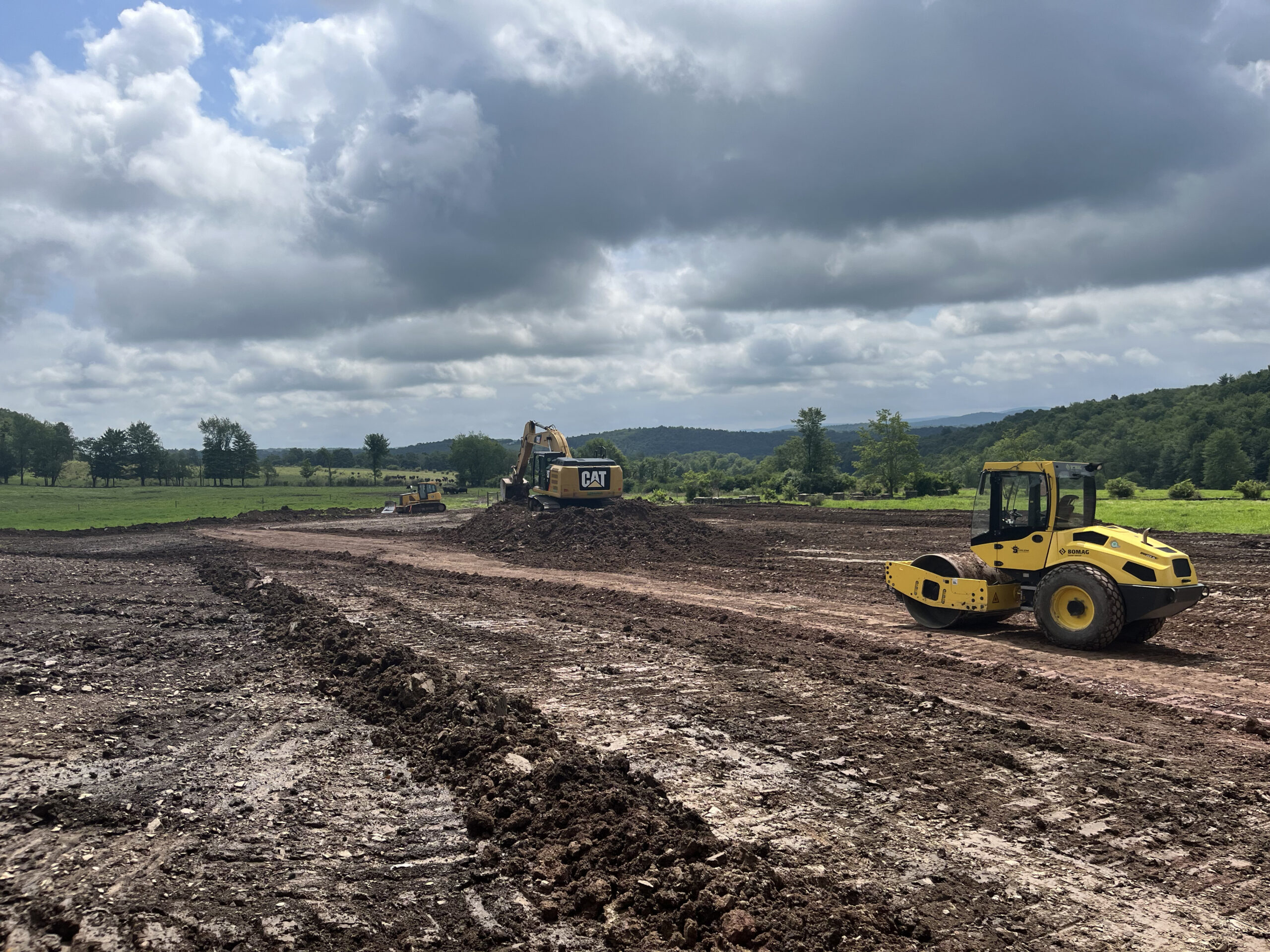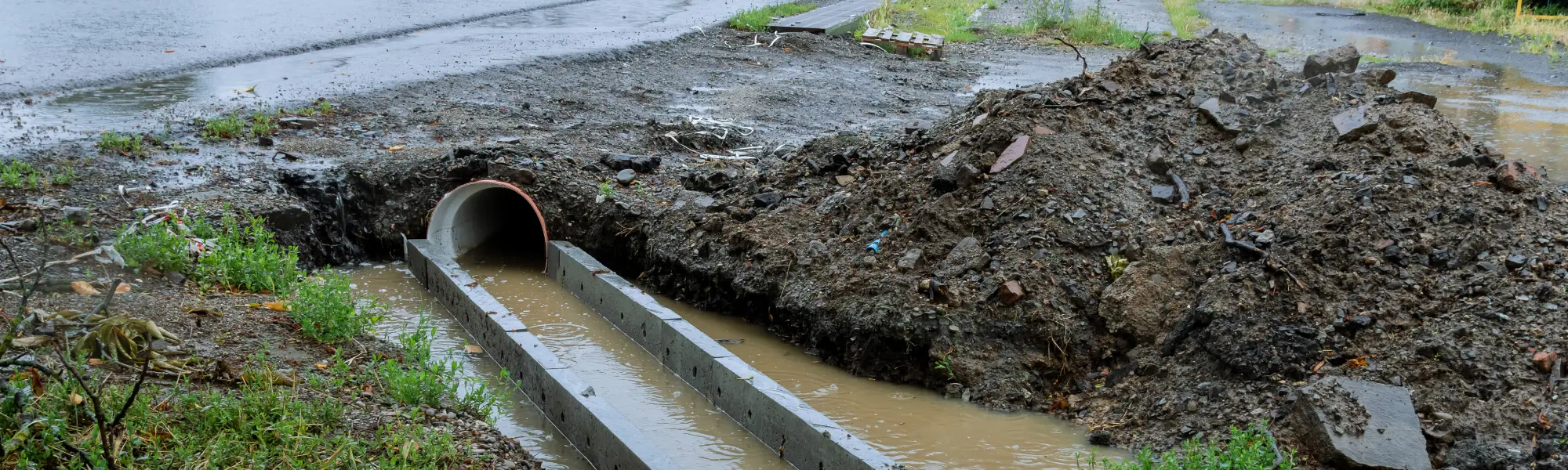
The right drainage fix depends on where your water problem starts. French drains handle groundwater and subsurface moisture. Swales move surface runoff across open ground. Catch basins collect water at one specific low point, like the bottom of a driveway. Most Pennsylvania properties end up needing more than one, with total cost depending on which combination your yard actually needs.
The Question We Actually Ask First
Most people who call us have already picked a solution. They read an article, saw the word “French drain,” and assumed that’s the fix. We don’t start there.
Pro Tip: Before you call anyone, walk your property during or right after a hard rain. Watch where the water sits, where it moves, and how fast it disappears. That fifteen minutes tells us more than a dry-day site visit ever could.
The first thing we check isn’t what kind of drain to install. It’s whether the water is coming from above the ground or below it. Install a French drain when the real problem is surface runoff pouring in from a neighbor’s uphill lot, and you’ll spend money on a system that never touches the actual water. We see this misdiagnosis more than any other mistake on residential properties across Susquehanna County. It’s a mistake our crews catch during site prep (link to: /services/site-preparation-services/), before anyone digs a trench.
For a broader look at how these pieces fit into a full property plan, our complete guide to stormwater management covers grading, erosion control, and Pennsylvania’s permitting rules in more depth.
French Drains: For Water Moving Through the Soil
A French drain is a perforated pipe buried in a gravel trench. It pulls groundwater and soaked-in moisture out of the surrounding soil and carries it to a lower discharge point.
Best for: foundations, retaining walls, and yards that stay soggy long after rain has stopped, even when the surface looks dry.
Cost, complexity, and upkeep: A French drain runs $10 to $35 per linear foot, so a standard 50- to 100-foot run costs $1,500 to $6,500 installed, covering trenching, pipe, gravel, and filter fabric. Installation is moderate to high complexity. Maintenance is low once it’s in, the main risk is silt clogging the pipe if the filter fabric was skipped or damaged during install. On new construction, we run this trench alongside foundation excavation while the footer is already open, for a fraction of what it costs to trench a finished yard later.
Did You Know? A properly installed French drain, with the right filter fabric and gravel bedding, typically lasts 20 to 30 years before it needs replacement. Poorly installed ones can clog within a few seasons.
Swales: For Water Moving Across the Surface
A swale is a shallow, sloped channel, usually grass-lined, that carries surface runoff across a property toward a safe discharge point. It works above ground, before water ever soaks in.
Best for: larger or rural lots, and anywhere runoff needs to travel a long distance before it reaches an outlet, ditch, or pond.
Cost, complexity, and upkeep: Swales run $5 to $15 per linear foot, putting most residential jobs between $1,000 and $4,000, since they’re mostly grading and seeding rather than pipe and excavation. Installation is low to moderate complexity, and upkeep means regular mowing and occasional erosion checks after heavy storms. A swale takes its shape during final grading, not after; get the slope wrong at that stage, and the channel won’t carry water anywhere.
Did You Know? The EPA notes that grassed swales work best on small drainage areas with light runoff, and are often used in place of buried storm sewer pipe when the site allows for it.
Catch Basins: For Water Collecting at One Spot
A catch basin is an underground box with a grated inlet. Water enters through the grate, settles in the basin, and drains out through a connected pipe.
Best for: the bottom of a sloped driveway, the corner where two grades meet, or wherever a downspout dumps water right next to the house.
Cost, complexity, and upkeep: A single catch basin runs $800 to $2,500 installed, more with a longer outlet pipe run. Installation is moderate complexity. Maintenance matters more here than the other two options: basins collect leaves, sediment, and debris, and one that isn’t cleaned annually will clog within a few years. A catch basin placed correctly the first time also spares you a driveway repair bill later, since standing water at a drive’s low point is what eventually cracks and heaves asphalt.
Pro Tip: If your catch basin sits at the bottom of a driveway, size the grate for the full width of the drive, not just the low point. A narrow grate gets bypassed by sheet flow in a heavy storm, and the water just runs around it.
Comparing All Three at a Glance
Solution: French Drain | Best For: Groundwater, subsurface moisture, foundations | Typical Cost: $1,500–$6,500 | Installation: Moderate–High | Maintenance: Low, if installed correctly Solution: Swale | Best For: Surface runoff across large or sloped lots | Typical Cost: $1,000–$4,000 | Installation: Low–Moderate | Maintenance: Moderate (mowing, erosion checks) Solution: Catch Basin | Best For: Concentrated water at driveways, patios, downspouts | Typical Cost: $800–$2,500 | Installation: Moderate | Maintenance: Moderate–High (annual cleanout)
When You Need More Than One
On most properties we work, one solution alone doesn’t finish the job. A yard with a wet foundation and a soggy low corner near the driveway often needs a French drain at the foundation and a catch basin at the driveway, tied together through the same outlet. A rural lot with runoff crossing the whole property usually pairs a swale with a catch basin at the point where the water needs to disappear underground.
We see this combination most often on properties built before modern stormwater codes, where the grading wasn’t designed for today’s storm intensity. Most grading contractors treat drainage as an afterthought; we build it in from day one. If you’re already planning site prep, foundation excavation, or septic system installation for a new build, that’s the cheapest point to run drain pipe alongside the footer or tank trench, instead of digging up a finished yard later.
This is where our stormwater and drainage solutions work starts, with an assessment of your specific water sources, not a one-size-fits-all install. On properties where the grade itself is part of the problem, that work often ties into a broader excavation and site prep project. If the wet area sits near a driveway or slope, it’s worth reviewing alongside any retaining wall or driveway repair work, since regrading and drainage usually go hand in hand.
Guessing at the fix costs more than diagnosing it right the first time. A drain installed in the wrong spot doesn’t just fail to help, it can send water somewhere worse.
If you’re dealing with standing water, a wet basement, or runoff that never seems to go anywhere, contact Herbert Excavating for a property drainage assessment. Unlike excavation contractors who quote a fix over the phone, we walk the site first and diagnose before we dig. Whether that means one catch basin or a full slate of excavation services, we scope it as one job. Call 570-702-7679 or request a free estimate online.
Frequently Asked Questions
Which is cheaper: a French drain or a catch basin?
A single catch basin usually costs $800 to $2,500 installed, while a standard French drain runs $1,500 to $6,500 for a typical residential length. Length and depth drive the final number, so a short French drain run can sometimes cost less than a catch basin with a long outlet pipe.
Can I use a French drain, swale, and catch basin together?
Yes, and on many properties that’s the right approach. Each one handles a different type of water movement, so combining them covers groundwater, surface runoff, and concentrated flow points in a single plan.
How long does each drainage solution last?
A well-installed French drain typically lasts 20 to 30 years. Catch basins and their pipes often last even longer with annual cleaning, while swales can function indefinitely if the vegetation and slope are maintained.
Do I need a permit for this work in Pennsylvania?
Most residential French drains, swales, and catch basins don’t require one. Projects disturbing 5,000+ square feet need an erosion and sediment control plan under PA DEP Chapter 102, and work near a waterway may need extra review.
How do I know which solution my property actually needs?
Watch where water sits and moves during or right after a rainstorm. Standing water near a foundation with dry surface soil points to groundwater and a French drain, while water sheeting across the yard points to surface runoff and a swale or catch basin.